
Did you know?
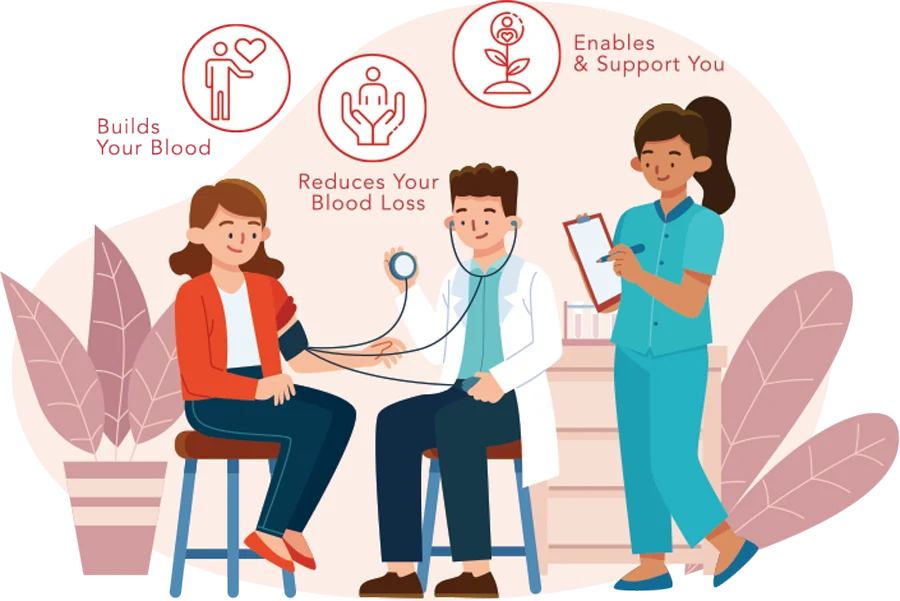
The best blood is your own blood. Patient Blood Management (PBM) helps you be your own blood bank.
Why is it so beneficial?
- Prepares you for surgery to reduce complications and recovery time (getting home faster and in better health).
- Optimises you to achieve the best outcome and improve your quality of life.
- Reduces your chances of hospital-related illness or complications.
- Reduces overall cost as you can avoid extra days in hospital with fewer interventions.
- Your doctor can concentrate on your primary issue rather than being distracted with anaemia, giving blood or dealing with the side-effects of blood transfusion.
When should I ask for PBM?
- If your doctor tells you that you are anaemic or require a blood transfusion.
- If you have a chronic disease such as chronic kidney diseases, heart disease, cancer, bleeding disorder or heavy menstrual bleeding as these increase risk of anaemia.
- If you have a planned surgery. Always ask your Doctor to check your Haemoglobin – ideally at least 4 weeks before surgery.
- If you are pregnant – especially in the 3rd trimester of pregnancy (even if Haemoglobin was checked earlier).
- If you are undergoing chemotherapy or other treatments for cancer.
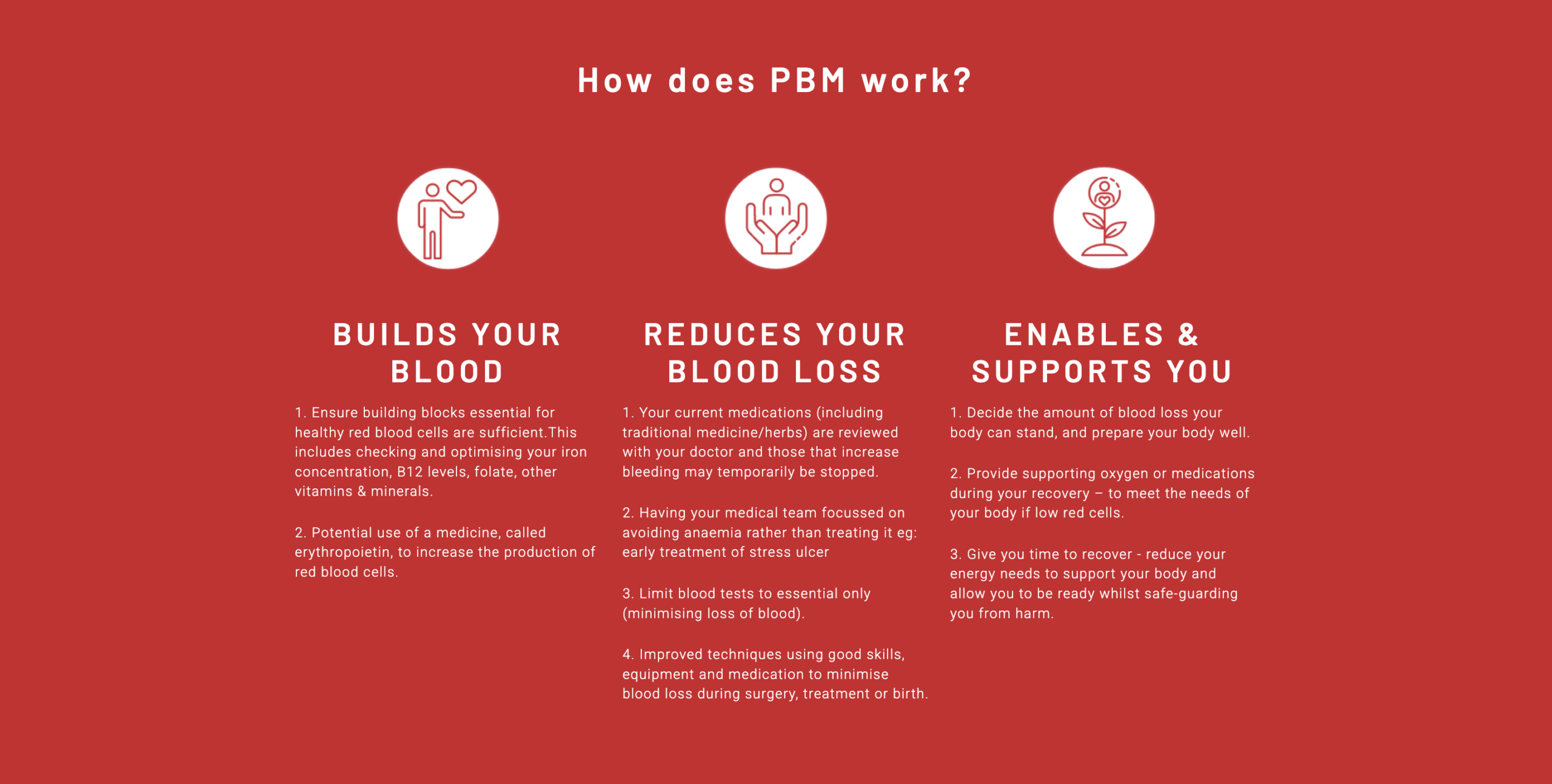
PBM is the scientific use of safe, effective medical and surgical techniques to prevent anaemia and reduce blood loss to improve outcomes.
What is my role in PBM?
PBM is centred around you. It gives you control of your health in order to improve your outcomes.

Important tips:
Be well informed & understand what is involved. Questions to ask your doctor:
- What is my Haemoglobin level (is it above 13)?
- What are the risks, benefits and alternatives to the suggested treatment (including blood transfusion)?
- How will my blood loss be reduced?
- What will be done to reduce the chances of a blood transfusion?
- If I am a patient for whom blood transfusion is NOT AN OPTION, what medical and surgical techniques will be used?